
"season introduction"
5000 article(s) found

Introduction to the variety treatment method of grinding scale for flavor description of coffee farm in Kenya
Kenya Coffee Manor Flavor description Grinding scale Variety treatment method the coffee producing areas in Kenya are mainly concentrated in the mountains of Kenya (Mt. The plateau region represented by Kenya). Tropical climate, acid red volcanic soil provides a natural and suitable growth environment for coffee. Major producing areas such as Nyeri and Ruiru in central China and other coffee producing countries

Bali coffee varieties producing area flavor taste boutique coffee beans characteristics introduction
Bali is Indonesia's more than 13600 islands in the most dazzling island, located 8 degrees south of the Indian Ocean equator, east of Java, the island is 140 kilometers wide from east to west, 80 kilometers from north to south, the total area of the island is 5620. Bali is an Indonesian island located at the western end of the Lesser Sunda Islands, roughly rhombic in shape, with an east-west axis. Area approximately 5620

Introduction to the story information of Shyira Sheila washing Plant in Niabihu Coffee region, Nyabihu, Rwanda
Professional coffee knowledge exchange more coffee bean information please follow the coffee workshop (Wechat official account cafe_style) Sheila Water washing Factory (Shyira) is a bright new star in the Nyabihu producing area in western Rwanda, it was officially launched in 2017, Sheila is located at 2000 meters above sea level, and collects cherries from small farmers at 2400 meters above sea level, 2400 meters above sea level.

Introduction of Lutesilo producing area in the western province of Malaba Coffee Chimel Manor, Rwanda
Malaba Coffee grows in southern Rwanda, about 12 kilometers (7 miles) from the city of Butare and 150 kilometers (93 miles) from the capital, Gejali. The plan began in the Malaba area of Butare province, but was taken over by a local government organization in 2006, which is now part of the Huye district of the southern province. Due to its proximity to the East African Rift Valley and the Neuenway Forest Mountains, the terrain

Introduction to the characteristics of flavor and taste in the producing area of Antigua Huashen coffee in Guatemala
This is because Guatemala is located in the tropics, the northern and eastern coastal plains have a tropical rain forest climate, and the southern mountains have a subtropical climate, with two dry and wet seasons a year, with the wet season from May to October and the dry season from November to April of the following year. The central plateau is also the cultural center of Guatemala, where temperatures are mild all year round at an altitude of 1300 to 1800 meters, with daily temperatures between 18 and 28 ℃.

Introduction to the characteristics of Grinding degree in Coffee Bean producing area of Colombia
Colombian coffee beans Colombia is the world's third (and second) coffee producer and exporter, but there is no doubt that Colombia is the world's largest exporter of Arabica coffee and the largest exporter of washed beans. Such a large yield is due to Colombia's unique natural soil and water environment and scientific planting technology. Columby

Nicaragua Karolina Manor Coffee introduction Nicaragua Karolina Coffee Manor
Professional coffee knowledge exchange more coffee bean information Please follow Coffee Workshop (Wechat official account cafe_style) LA CAROLINA Wilmer Figueroa acquired the farm in 2011 and has been working to improve the quality to reach the level of professional coffee. The farm employs 15 seasonal workers during the harvest season, and in 2019, we bought five bags of this special mug of maracato.
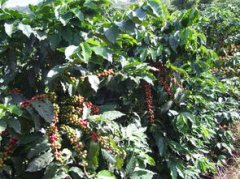
An introduction to the characteristics and attributes of Coffee in eight producing areas of Guatemala
The Ekatra Valley rises to 2000 meters (6500 feet), with dense shade and unique ecology, and the nearby Fuego volcano erupts, making its coarse, sandy soil rich in a variety of minerals. Temperate sea breezes from the Pacific and a seasonal climate allow coffee in this region to be dried by sunlight and processed according to traditional family methods that have been accumulated over the years. [characteristics

Introduction to the Flavor description Grinding scale of Ethiopian Native seed 90 + Honey Kiss Coffee
Looking forward to Ruby (Perci Ruby N2): [Origin]: 90 + Panamanian Rosa Manor [season]: 2013 to 2014 [Variety]: Rosa [Level]: 195 [altitude]: 1250m-1650m [treatment]: 90 + patented Ruby treatment [Flavor]: the ruby treatment has strong tropical fruit flavours of brandy and honey. The heat of mangoes and pineapples

Introduction to Robusta Coffee, the planting method of Kenyan Coffee varieties
The Kenyan coffee variety was first brought to Kenya to be planted in Bourbon bourbon. In the 1950s, through unremitting efforts, the then agricultural research institution Scott Laboratory selected two excellent hybrids, SL-28 and SL-34, subverting the long-standing prejudice that artificial breeding varieties are not excellent natural varieties. SL-28 and SL-34 help Kenyan coffee

Introduction of Rwanda Coffee varieties Malaba Coffee Chimeier Manor
Laba Coffee is grown in southern Rwanda, about 12 kilometers (7 miles) from the city of Butare and 150 kilometers (93 miles) from the capital, Gejali. The plan began in the Malaba area of Butare province, but was taken over by a local government organization in 2006, which is now part of the Huye district of the southern province. Due to its proximity to the East African Rift Valley and the Neuenway Forest Mountains, this area has many topography.

A brief introduction to the description of flavor, taste and aroma characteristics of spicy and unrestrained Kenyan boutique coffee beans
Almost all Kenyan coffee is sold through the coffee exchange in Nairobi, the capital. Coffee auctions are held at coffee exchanges every Tuesday during the harvest season. Traders with trading qualifications will get raw bean samples in advance, and after the cup test, they will choose the raw beans they like. In the following auction, the highest bidder will get. The coffee auction system in Kenya is considered

Introduction to the Flavor and Taste Manor of Colombian Fine Coffee beans treated by Sun drying
Cauca province is similar to other southwest producing areas, the precipitation shows an obvious unimodal distribution (monomodal), and the dry season mainly occurs from August to September every year, followed by a concentrated coffee blossom season followed by the next year's concentrated coffee harvest season. The biggest difference in climate between Cauca and other producing areas is probably the relatively large temperature difference, with an average daily temperature of 11 ℃ and daytime.

Bitter, sweet, fragrant but not sour Bali coffee plantation flavor variety introduction
Bali is Indonesia's more than 13600 islands in the most dazzling island, located 8 degrees south of the Indian Ocean equator, east of Java, the island is 140 kilometers wide from east to west, 80 kilometers from north to south, the total area of the island is 5620. Bali is an Indonesian island located at the western end of the Lesser Sunda Islands, roughly rhombic in shape, with an east-west axis. Area approximately 5620

Introduction to the flavor and taste characteristics of the bright Costa Rican coffee manor
The climatic conditions in Costa Rica are very different, completely subverting the classification of the four seasons of the year, there are only two seasons, the rainy season from April to December, and the dry season from the end of December to April of the following year, also known as summer. The annual average temperature in San Jose, the capital, ranges from 15 ℃ to 26 ℃, while the temperature in coastal areas is relatively high, with a night average temperature of 2 in the Caribbean.

Introduction of coffee planting mode, variety and planting area in Tanzania
Coffee species therefore, so far, coffee in Tanzania is also dominated by bourbon and Kent. Coffee varieties Arabica 70% planted between 1000-2500 m Robsta 30% planted between 800m-900m outline and classification of Tanzanian coffee beans North: 1 and 2 harvest season: July-December west: 3 and 4 harvest season: may-

Kenyan coffee beans estate characteristics Graded production area Flavor description Processing method Taste introduction
Bourbon Bourbon was first brought to Kenya for cultivation. In the 1950s, Scott Laboratory, an agricultural research institution at that time, made unremitting efforts to select SL-28 and SL-34, two excellent hybrids, which overturned the long-term artificial breeding varieties without natural varieties.

Introduction to the blending of fine coffee introduction to the proportion and types of coffee blending
In the field of boutique coffee, great efforts have been made to test and study the varieties, harvest and treatment methods of coffee. Tim, for example, has spent a long time working with farmers to experiment with different ways of harvesting and handling coffee. In addition, boutique coffee shops respect coffee farmers and take the initiative to raise the purchase price of good coffee, hoping that farmers will have the enthusiasm to produce better quality coffee beans so as to achieve sustainable development and

Taste characteristics of Guatemalan Coffee Manor with Sweet and sour Fruit introduction to Latitha Manor
Guatemala is located in the tropics, the northern and eastern coastal plains have a tropical rain forest climate, the southern mountains have a subtropical climate, the year is divided into two dry and wet seasons, with the wet season from May to October and the dry season from November to April of the following year. The narrow and fertile flatlands on the Pacific side of Guatemala have a tropical climate. The central plateau is also the cultural center of Guatemala, where the year-round temperature ranges from 1300 to 1800 meters.

An introduction to the Grinding scale Manor by the method of Flavor treatment in Kenya Coffee producing area
Taste description of Kenyan Coffee production area Flavor treatment Grinding scale Manor introduction Bourbon bourbon was first brought to Kenya for planting. In the 1950s, the then agricultural research institution, Scott Laboratory, made unremitting efforts to select two excellent hybrids, SL-28 and SL-34, subverting the fact that artificial breeding has not been superior to natural varieties for a long time.